Sunday, February 23, 2014
Sunday, November 3, 2013
Is this Kenneth Brannagh that I see before me?
| Kenneth Branagh's Macbeth will be broadcast live from Manchester on November 6 at Fort Worth's Modern Art Museum |
e. This production, too, will be filmed and subsequently screened in cinemas around the world. If this production is to be anything like Tenant's wildly successful rendition of
There is nothing new about the idea of filming a play for mass offerings in theaters. In the 1960's, Richard Burton's performance in a "rehearsal" of Hamlet and Laurence Olivier's Othello both found their way to the silver screen. While the screening of films made of these stage productions certainly succeeded in preserving the actors' performances and making the productions available to a wider audience, they were not commercially or critically successful. While both productions succeeded in preserving the performances for future generations, making the productions available to a wider audience, and lowering the prices of tickets for those viewing the production as a film, the combination of theatrical acting and poor cinematography made the films unappealing. We may rightly wonder what it is that has caused the resurgence of this failed technique which failed so utterly before.
| David Tenant prepares for his role as Richard II Photo: IMDB |
Regardless of the reason for its resurgence, there can be no doubt that filming stage productions of Shakespeare is now en vogue. According to a Time magazine article, Benedict Cumerbatch is set to appear in a production of Hamlet next year. While nothing has been said yet, we can only assume the production is likely to be coming to a screen near you...
Sunday, September 8, 2013
The Complete Works of William Shakespeare at the AT&T Performing Arts Center
| Source: AT&T Performing Arts Center Website |
Like all performances in the "Complete Works" series, The Comedy of Errors is a staged-reading. The actors wear simple costumes, use minimal props, and move around the stage as they would in a full production, but they read from their scripts rather than perform purely from memory. To keep expenses low, each production only spends about a week in development before the two performances.
The Comedy of Errors opens today, September 8, at 3 PM and also plays tomorrow, September 9, at 7 PM. Ticket prices are $10 online or "pay-what-you-can" at the door. Admission is free to Shakespeare Dallas members and students get 2 free tickets. For more information about the venue, times, and ticket prices, I recommend visiting http://www.attpac.org/series/TheCompleteWorks/.
Friday, August 16, 2013
Cleopatra: 50 years later
There can be no doubt that 1963 was a year for significant movies. Frederico Fellini's 8 1/2 was a tour de force artistic achievement now beloved by film fans and critics, Dr. No began the James Bond film franchise that has since enjoyed an excellent 50 years, and Alfred Hitchcock's The Birds became an instant classic thriller. Big budget epics were also popular that year but by far the biggest, and the highest grossing, was Cleopatra, now probably best remembered as the film that nearly ruined 20th Century Fox. Much of the film's infamy also stems from Elizabeth Taylor's million-dollar salary, the first in Hollywood. Blaming Taylor
was unfair, the film was over budget because of its size, not its star. However, Taylor's salary and the production of this film were milestones. They marked the beginning of the end for the epic as a movie genre and the rise of "star power" in Hollywood.
Elizabeth Taylor began her career under the old studio system where "movie moguls," the producers and studio owners, controlled the movie business in every aspect. Actors, even major celebrities like Clark Gable and Myrna Loy, were completely at the mercy of the studios that owned their contracts. These contracts limited the choices actors could make, and the salaries they could command. At age 15, Elizabeth Taylor realized that for her at least, things could be different. After publicly reprimanding Louis B. Meyer for verbally abusing her mother, Taylor stormed out of his office. While a lesser star would have been fired for standing up to a producer, Taylor suffered no recriminations. In an interview with Johnny Carson many years later, Taylor remarked that it was at that moment she realized "Elizabeth Taylor the commodity" was a source of strength. She realized that movie moguls could not act with impunity if a star's marketability was powerful enough.
By 1963, Elizabeth Taylor was a screen icon, with success in critically and popularly acclaimed films. She had worked alongside legendary actors including James Dean, Marlon Brando, Rock Hudson, and Paul Newman. She had attained the stature necessary to command a record-breaking salary. More actors would follow Elizabeth Taylor's lead; now, a million-dollar salary seems like only a modest fee for a star.
| Movie Poster for Giant Source: Wikipedia |
Elizabeth Taylor began her career under the old studio system where "movie moguls," the producers and studio owners, controlled the movie business in every aspect. Actors, even major celebrities like Clark Gable and Myrna Loy, were completely at the mercy of the studios that owned their contracts. These contracts limited the choices actors could make, and the salaries they could command. At age 15, Elizabeth Taylor realized that for her at least, things could be different. After publicly reprimanding Louis B. Meyer for verbally abusing her mother, Taylor stormed out of his office. While a lesser star would have been fired for standing up to a producer, Taylor suffered no recriminations. In an interview with Johnny Carson many years later, Taylor remarked that it was at that moment she realized "Elizabeth Taylor the commodity" was a source of strength. She realized that movie moguls could not act with impunity if a star's marketability was powerful enough.
By 1963, Elizabeth Taylor was a screen icon, with success in critically and popularly acclaimed films. She had worked alongside legendary actors including James Dean, Marlon Brando, Rock Hudson, and Paul Newman. She had attained the stature necessary to command a record-breaking salary. More actors would follow Elizabeth Taylor's lead; now, a million-dollar salary seems like only a modest fee for a star.
Wednesday, August 7, 2013
Movies to watch before you go to college
Have you graduated from high school this year? Do you plan to attend college? Are you wondering what to do with the last days of summer? If the answers to these questions are "yes," then you are in luck. The following is a list of movies that make for great viewing before you head off for college.
The Freshman
Reasons to watch it: Marlon Brando's performance (a sly parody of his role in The Godfather) is wonderful, Matthew Broderick and Penelope Ann Miller are very funny, and the movie is cleverly-written, full of excellent character performances and references to other films.
Keep an eye out for: References to Marlon Brando's past roles and The Godfather films, including a cameo of actor Gianni Russo near the end of the film.
Life lesson: If someone offers you a ride to college in a classic sports car, don't take it.
If you liked this: Check out director-writer Andrew Bergman's other fine comedy The In-Laws.
Say Anything
Reasons to watch it: John Cusack plays a very likable hero and the movie makes a lot of funny and insightful observations about growing up. Last if not least, the movie predicts the rise in popularity of MMA. Who'd have thought?
Keep an eye out for: Joan Cusack's uncredited performance as Lloyd's older sister
Life lesson: Guys who hang out at the "Gas'n Sip" are not probably the best people to get relationship advice from.
Dr. Strangelove
Reasons to watch it: Lots of great performances (including one of George C. Scott's greatest roles), witty dialogue, prime political satire, and probably some of the funniest quotable movie lines. Academics and film snobs love to reference this movie.
Keep an eye out for: Peter Sellers' humorous multiple roles.
Life lesson: Whatever you do, don't let them see the "big board."
The Graduate
Reasons to watch it: Incredible cinematography, editing, and set design, plus a chance to see Dustin Hoffman's first major role in a film.
Life lesson: Plastics!
Monday, August 5, 2013
The End of the World as We Know It: Our ongoing fascination with stories of the Apocalypse
| Source: Wikipedia |
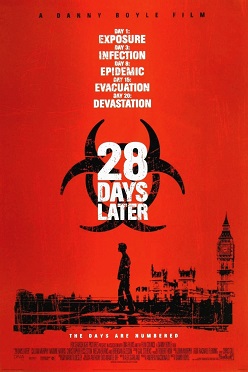
According to popular interpretations of the Mayan calendar, the world was going to come to an end sometime last year. Ultimately the week the world was supposed to end came and went without fanfare. Knowing, 2012, World War Z, 28 Days Later, Day After Tomorrow, and television series such as Falling Skies, and The Walking Dead draw huge audiences. Even James Bond has jumped on the bandwagon with the franchise's latest film installment Skyfall striking a rather apocalyptic note with Adele singing "This is the end... hold your breath and count to ten." Books prophesying the Apocalypse (often promising tips for survivors) fly off the shelves. This preoccupation with an end or near-end to the world is clearly a popular fantasy for several reasons.This "scare" was not our first, however. There was a sizable group of people who believed the world would come to an end in the year 2000. Before this, going back to ancient times, other have speculated or prophesied the end of the world.
| Source: Wikipedia |
Perhaps the popularity of "end of the world" theories stems most from the seemingly infinite variety of ways that the world could end or change radically. For zombie fans, there is the "Zombie Apocalypse," for compulsive hand washers (such as myself) there are pandemics, for environmentalists mass pollution or ecological disasters, for physicists there are planetary collisions. For anti-war activists, there is the threat of a nuclear apocalypse. No matter our political, religious, or philosophical standpoint, we can all envision some sort of apocalypse taking place. Much like cable television, the diversification of apocalypse theories brings them to more people overall. However, the finality of an apocalypse also makes it the perfect frightening fantasy (or rhetorical tool). It is the ultimate answer to the question "What's the worst that could happen?" Unfortunately, this post, like all good things, must end. Hopefully, my musings on our impending doom have brought a little cheer to your Monday morning.
Yours til the end...
Thursday, August 1, 2013
The Great Gatsby, The Hunger Games, and what they tell us about Popular Culture
| Source: Wikipedia |
| Gatsby's Mansion from the 2013 film The Great Gatsby Source: imdb.com |
| James Dean plays troubled teen Jim Stark in Rebel Without a Cause Source: Wikipedia |
Of course, this kind of cultural appropriation is not new. Nor indeed, is this phenomenon confined merely to literature. During the 1700s, in an effort to quell Jacobite sentiments in Scotland, the English government banned kilts, bagpipes, and other symbols of Scottish nationalism, then appropriated these symbols to use as the icons of elite British regiments. Thus, the dominant cultural system absorbed counter-cultural symbols and turned them against the counter-culture. Later, in the 1950s and 1960s, wearing blue jeans became a way of "defying the establishment" as James Dean proved in Rebel Without a Cause (1955). It did not take long, however, for blue jeans to transition from icons of counter-culture, to fashion statements. Instead of defying popular culture, blue jeans came to signify an adherence to popular culture. True, jeans are not as complex as a novel, but the pattern is the same.
On a final note, even Baudrillard's indictment of "the simulation" was, itself, absorbed by "the simulation." His essay "Simulacra and Simulations" became the inspiration for the popular Matrix movies, which, for all their good intentions, quickly devolved into mindless action movies. At the end of the day, The Simulation always wins.
Subscribe to:
Posts (Atom)