Sunday, September 8, 2013

The Complete Works of William Shakespeare at the AT&T Performing Arts Center

Source: AT&T Performing Arts Center Website
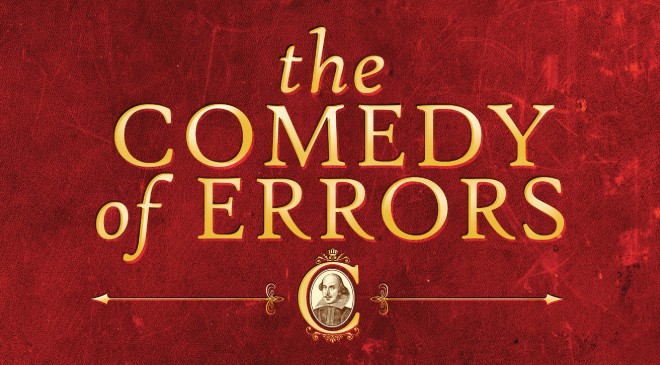
It is that time of year again! Shakespeare Dallas's fall season is starting and the first offering for this year is a staged-reading The Comedy of Errors, Shakespeare's classic tale of mistaken identities. The play is probably among the first Shakespeare wrote and is certainly one of his funniest comedies. It is also the shortest play Shakespeare ever wrote. Starting off with a short and silly play seems like a nice choice considering that this spring's season ended with a "live and uncut" production of Richard III, Shakespeare's second-longest play and certainly one of his darkest.

Like all performances in the "Complete Works" series, The Comedy of Errors is a staged-reading. The actors wear simple costumes, use minimal props, and move around the stage as they would in a full production, but they read from their scripts rather than perform purely from memory. To keep expenses low, each production only spends about a week in development before the two performances.

The Comedy of Errors opens today, September 8, at 3 PM and also plays tomorrow, September 9, at 7 PM. Ticket prices are $10 online or "pay-what-you-can" at the door. Admission is free to Shakespeare Dallas members and students get 2 free tickets. For more information about the venue, times, and ticket prices, I recommend visiting http://www.attpac.org/series/TheCompleteWorks/.


Friday, August 16, 2013

Cleopatra: 50 years later

There can be no doubt that 1963 was a year for significant movies. Frederico Fellini's 8 1/2 was a tour de force artistic achievement now beloved by film fans and critics, Dr. No began the James Bond film franchise that has since enjoyed an excellent 50 years, and Alfred Hitchcock's The Birds became an instant classic thriller. Big budget epics were also popular that year but by far the biggest, and the highest grossing, was Cleopatra, now probably best remembered as the film that nearly ruined 20th Century Fox. Much of the film's infamy also stems from Elizabeth Taylor's million-dollar salary, the first in Hollywood. Blaming Taylor
Movie Poster for Giant
Source: Wikipedia
was unfair, the film was over budget because of its size, not its star. However, Taylor's salary and the production of this film were milestones. They marked the beginning of the end for the epic as a movie genre and the rise of "star power" in Hollywood.

Elizabeth Taylor began her career under the old studio system where "movie moguls," the producers and studio owners, controlled the movie business in every aspect. Actors, even major celebrities like Clark Gable and Myrna Loy, were completely at the mercy of the studios that owned their contracts. These contracts limited the choices actors could make, and the salaries they could command. At age 15, Elizabeth Taylor realized that for her at least, things could be different. After publicly reprimanding Louis B. Meyer for verbally abusing her mother, Taylor stormed out of his office. While a lesser star would have been fired for standing up to a producer, Taylor suffered no recriminations. In an interview with Johnny Carson many years later, Taylor remarked that it was at that moment she realized "Elizabeth Taylor the commodity" was a source of strength. She realized that movie moguls could not act with impunity if a star's marketability was powerful enough.

By 1963, Elizabeth Taylor was a screen icon, with success in critically and popularly acclaimed films. She had worked alongside legendary actors including James Dean, Marlon Brando, Rock Hudson, and Paul Newman. She had attained the stature necessary to command a record-breaking salary. More actors would follow Elizabeth Taylor's lead; now, a million-dollar salary seems like only a modest fee for a star.

Wednesday, August 7, 2013

Movies to watch before you go to college


Have you graduated from high school this year? Do you plan to attend college? Are you wondering what to do with the last days of summer? If the answers to these questions are "yes," then you are in luck. The following is a list of movies that make for great viewing before you head off for college.

The Freshman


Image Source: Wikipedia
Reasons to watch it:  Marlon Brando's performance (a sly parody of his role in The Godfather) is wonderful, Matthew Broderick and Penelope Ann Miller are very funny, and the movie is cleverly-written, full of excellent character performances and references to other films. 

Keep an eye out for: References to Marlon Brando's past roles and The Godfather films, including a cameo of actor Gianni Russo near the end of the film.

Life lesson: If someone offers you a ride to college in a classic sports car, don't take it.

If you liked this: Check out director-writer Andrew Bergman's other fine comedy The In-Laws.


Say Anything

Reasons to watch it:  John Cusack plays a very likable hero and the movie makes a lot of funny and insightful observations about growing up. Last if not least, the movie predicts the rise in popularity of MMA. Who'd have thought?

Keep an eye out for: Joan Cusack's uncredited performance as Lloyd's older sister

Life lesson: Guys who hang out at the "Gas'n Sip" are not probably the best people to get relationship advice from.

Dr. Strangelove

Reasons to watch it: Lots of great performances (including one of George C. Scott's greatest roles), witty dialogue, prime political satire, and probably some of the funniest quotable movie lines. Academics and film snobs love to reference this movie. 

Keep an eye out for: Peter Sellers' humorous multiple roles.

Life lesson: Whatever you do, don't let them see the "big board."

The Graduate

Reasons to watch it: Incredible cinematography, editing, and set design, plus a chance to see Dustin Hoffman's first major role in a film.

Life lesson: Plastics!


Monday, August 5, 2013

The End of the World as We Know It: Our ongoing fascination with stories of the Apocalypse

Source: Wikipedia

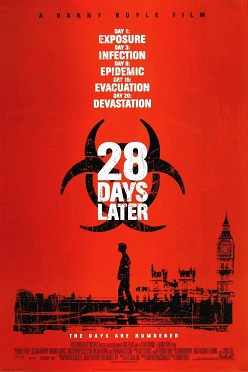
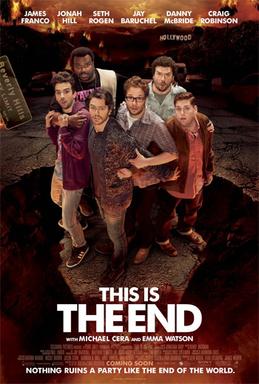
According to popular interpretations of the Mayan calendar, the world was going to come to an end sometime last year. Ultimately the week the world was supposed to end came and went without fanfare. Knowing, 2012, World War Z, 28 Days Later, Day After Tomorrow, and television series such as Falling Skies, and The Walking Dead draw huge audiences. Even James Bond has jumped on the bandwagon with the franchise's latest film installment Skyfall striking a rather apocalyptic note with Adele singing "This is the end... hold your breath and count to ten." Books prophesying the Apocalypse (often promising tips for survivors) fly off the shelves. This preoccupation with an end or near-end to the world is clearly a popular fantasy for several reasons.This "scare" was not our first, however. There was a sizable group of people who believed the world would come to an end in the year 2000. Before this, going back to ancient times, other have speculated or prophesied the end of the world.

Source: Wikipedia
Certainly there are many things that lend credence to apocalypse theories. The book of Revelation describes the end of the world in great detail, though the exact timeline and exact meaning of the events described is heavily debated by theologians and historians alike. It is clear from research that nuclear weapons pose a real threat to life on earth.Other issues such as pollution and global warming promise threats. This begs the question, however, of why we gravitate towards fictional accounts of "the end" so consistently.

Perhaps the popularity of "end of the world" theories stems most from the seemingly infinite variety of ways that the world could end or change radically. For zombie fans, there is the "Zombie Apocalypse," for compulsive hand washers (such as myself) there are pandemics, for environmentalists mass pollution or ecological disasters, for physicists there are planetary collisions. For anti-war activists, there is the threat of a nuclear apocalypse. No matter our political, religious, or philosophical standpoint, we can all envision some sort of apocalypse taking place. Much like cable television, the diversification of apocalypse theories brings them to more people overall. However, the finality of an apocalypse also makes it the perfect frightening fantasy (or rhetorical tool). It is the ultimate answer to the question "What's the worst that could happen?" Unfortunately, this post, like all good things, must end. Hopefully, my musings on our impending doom have brought a little cheer to your Monday morning.

Yours til the end...


Thursday, August 1, 2013

The Great Gatsby, The Hunger Games, and what they tell us about Popular Culture


Source: Wikipedia
F. Scott Fitzgerald's novel The Great Gatsby is widely regarded as one of the greatest American novels ever written. Nearly 90 years after its composition, it remains very popular among readers and, as Baz Luhrnmann's new film adaptation has proven, moviegoers. Suzanne Collins's Hunger Games trilogy is a bestselling series that has been adapted into an equally successful movie franchise. The success of both works has made them pop culture icons. This is ironic since The Great Gatsby and The Hunger Games actually criticize the very aspects of popular culture that popular culture emphasizes in them. Although The Great Gatsby is a biting critique of American materialism, the book has inspired art and films that emphasize the lavish lifestyle of Jay Gatsby. Similarly, although The Hunger Games criticizes the alleged "bread and circuses" atmosphere of contemporary America, the books have inspired movie adaptations (and numerous rip-offs) that capitalize on the inherent violence of the stories, preying on the very voyeurism they claim to criticize.


Gatsby's Mansion from the 2013 film The Great Gatsby
Source: imdb.com
The French critic Baudrillard argued that life was a simulation. He first posited that human concepts of meaning, power, law, and order were only simulations held in place by people who wrongly believe them to be real. However, Baudrillard went on to argue that "the simulation" (what most of us call "real life") would absorb any attempt to prove its existence, reinforcing its own hold on humans. While life itself may not be a simulation, popular culture certainly behaves the way Baudrillard argues "the simulation" behaves. Even successful critiques of American pop culture, like The Great Gatsby and The Hunger Games, ultimately fail to open our eyes to the inherent failings of popular culture. Although these books criticize the failings of American culture (our love of material objects and violent spectacle respectively), they have themselves become icons of the culture they criticize. We sigh as we imagine Gatsby's expensive cars, palatial home, and lavish parties. We thrill to the adventures of Katniss and her fellow competitors. Therefore, we support the very system the books we love criticize.
James Dean plays troubled teen Jim Stark
in Rebel Without a Cause
Source: Wikipedia

Of course, this kind of cultural appropriation is not new. Nor indeed, is this phenomenon confined merely to literature. During the 1700s, in an effort to quell Jacobite sentiments in Scotland, the English government banned kilts, bagpipes, and other symbols of Scottish nationalism, then appropriated these symbols to use as the icons of elite British regiments. Thus, the dominant cultural system absorbed counter-cultural symbols and turned them against the counter-culture. Later, in the 1950s and 1960s, wearing blue jeans became a way of "defying the establishment" as James Dean proved in Rebel Without a Cause (1955). It did not take long, however, for blue jeans to transition from icons of counter-culture, to fashion statements. Instead of defying popular culture, blue jeans came to signify an adherence to popular culture. True, jeans are not as complex as a novel, but the pattern is the same.

On a final note, even Baudrillard's indictment of "the simulation" was, itself, absorbed by "the simulation." His essay "Simulacra and Simulations" became the inspiration for the popular Matrix movies, which, for all their good intentions, quickly devolved into mindless action movies. At the end of the day, The Simulation always wins.
Wednesday, July 31, 2013

Editing on Instinct

Page edited by Honore de Balzac (1799-1850)
Photo from allposters.com

Whether you do it yourself, ask a friend, or hire a professional, editing creative writing is essential. While some authors, C. S. Lewis for one, can have managed to be successful without much care for editing, there are dozens who scrupulously edited their work. Balzac, the French realist, famously edited his own writing with detailed notes, massive deletions, and intense self-criticism as the copy of one of his manuscripts to the right attests. Tolkein, Goethe, and Wordsworth revised and edited their own work for decades, producing numerous editions or revisions. Fitzgerald spent over a year working on The Great Gatsby while James Joyce added his masterful short story "The Dead" to Dubliners years after he finished the other stories. While it is certainly possible to over-edit a text and second-guess oneself (Wordsworth was often guilty of this) most texts benefit from rigorous editing. As a writer who has edited his own work and that of others, I feel I am in a position to offer a few comments on the subject with a reasonable degree of authority.

In making all necessary changes, you will have to be careful to keep the author's artistic vision in mind. While considering the reader's impressions and the potential appeal of the work you are editing is important, editing too much can strip a work of its author's original intent. The editor must balance the writer's goals with his own. This is a difficult task that requires practice and patience on the part of editor and author. Even if the author and editor are the same person, it is possible to stray from one's original goals or ideas. Sometimes, as with great acting, the best writing can be spontaneous. Tolkein subconsciously scribbled the first line of The Hobbit while he was grading a student's exam. As an editor, you must be careful not to stifle the originality of the author. The best way to avoid this is to learn the author's vision, absorb the ideas of the book, then do what I call "editing on instinct." Assess what the work (be it a novel, a short story, a play, or a poem) then decide what seems "true" to the spirit of the work and what is not. That which is not "true" to the work should be changed or deleted, that which is should be preserved at all costs. This philosophy should be kept in mind when following the steps I suggest in the following paragraphs and (even if the particulars I recommend are disregarded) should be kept in mind. Approaching an author's work from this standpoint is essential.

The first step to editing creative writing, whether it is your own or someone else's, is to read the work, noting your impressions and correcting major errors (Microsoft Word "track changes" can be a very helpful tool with this step). If the work does not leave the emotional or intellectual impressions the author desires, this should be noted. General impressions are important at this stage as these will help you develop the instincts necessary to edit the book. Is the tone serious, sentimental, or silly? Do the characters feel realistic or exaggerated? Does the narrative progress in any particular order? The answers you give to these questions are vital. If the effect of the piece seems inappropriate or inconsistent with the author's stated purpose or the work's subject matter, revisions may be necessary. If you have identified an issue, take it up with the author and focus on specific instances where the problem seems to occur. If, for example, you are editing a novel about a cancer patient and you find the author's occasional bouts of levity disrespectful, consult him or her and point out specific passages. It may be the case that only a few sentences  throughout the work need alteration or you need to change your point of view as editor or perhaps the author needs to make his purpose more clear from the outset. In other cases, details may need to be added to enhance character depth and make imagery more vivid. As always, the overall vision and feel of the work should be your guide.

Once major issues in the writing have been addressed, it is time for you as editor to focus on sentence structure, vocabulary, punctuation, and spelling.  Ordinarily, proper English grammar rules and spelling should be observed but in some cases, the author may need to break rules intentionally to achieve certain effects. For example, characters (even narrators) may need to use incorrect grammar to create a better mental image of their personality and background for the reader. I have personally added slang and grammatical errors to dialogue in a novel I was editing in order to make the characters feel more real. Again, you should trust your instincts as a reader (or writer) in determining what a character should say or do.

While I do not believe the process of "editing on instinct" is revolutionary, I believe the idea can benefit many aspiring writers and editors. Ultimately, the concept is a good one because it respects the author's vision while still taking into account a reader's impressions. The editing process relies upon balance. The author's instincts as a writer, and the editor's instincts as a reader are both critical guides. Obviously, the more skilled the author is and the more well-read the editor is, the better their instincts and the finished work will be.


Sunday, July 28, 2013

"There is a world elsewhere"

Hello and welcome to "A World Elsewhere,"

My name is Adam Vera. I am a freelance writer 
with a BA in English Literature who regularly publishes a wide range of articles and essays, apart from the odd fictional piece. I love to study literature, film, and culture and plan to attend graduate school next fall to study Renaissance drama. My fictional influences include Shakespeare, Middleton, Marlowe, Poe, Melville, and Fitzgerald while my critical and scholarly influences include Montaigne, Barthes, and Baudrillard.

The title of my blog, inspired by a quotation from William Shakespeare's Coriolanus, is a nod to my love of Shakespeare and an allusion to the purpose of this blog, to explore the worlds offered by great works of art. My posts will deal with plays, books, films, television programs, and other aspects of popular culture, especially those relevant to current events or cultural trends. My goal is to provide intelligent, clearly-written, and thought-provoking posts that will be of interest to anyone who loves good literature, films, or other works of art. 

My blog should be of interest to students, academics, writers, and anyone else interested in literature or culture. Feel free to leave feedback, comments, dissenting views, or questions, I love them all. I am always conscious of my audience and will follow up on comments, possibly with new posts related to them. Finally, following my posts is free. You can have access to what I hope will be enjoyable and stimulating writing that follows currents of modern thought, while simultaneously looking beyond our current society into the vast expanse of human thought and creation represented by literary and artistic achievements handed down to us from that "world elsewhere."